












The carbon cycle as they don’t tell it at school: a journey through life, climate and sustainability
The carbon cycle is one of the most important and fascinating processes governing life on Earth. It is a kind of roundabout in which carbon, one of the most common elements in the universe, moves between the atmosphere, the earth, the oceans and living organisms. This journey of carbon has enabled life as we know it, but human intervention has drastically altered the natural cycle, threatening the delicate balance of the entire planet. Understanding how the carbon cycle works and its impact on the greenhouse effect is essential if we are to meet the challenges of climate change and continue on our path towards sustainable development.
The Earth’s thermal blanket
Before we dive into the carbon cycle, it is important to understand thegreenhouse effect, which is essential for maintaining the earth’s surface temperatures at life-sustaining levels.
The greenhouse effect is like a thermal blanket enveloping our planet and keeping it at a comfortable global average temperature of about 15 degrees Celsius.
Without this blanket, the average temperature of the Earth would be about -18 degrees Celsius. Which would not only force us to live in an igloo, but would make the development of life as we know it impossible.
But how exactly does it work? Solar radiation reaches the Earth; and part of it is absorbed by the surface, heating it up. The Earth, in turn, emits infrared radiation (heat) to the atmosphere. Certain gases in the atmosphere, known as greenhouse gases (such as carbon dioxide, methane and water vapour), trap some of this infrared radiation, preventing it from escaping into space and thus keeping the Earth’s surface warm. It is a bit like wearing a jacket: it does not produce heat like a stove but manages to keep our own heat close to our body, protecting us from the cold.
A cycle of billions of years
Carbon is everywhere around us: in the air, in the seas, in the soil, and in all forms of life. The carbon cycle is the natural process by which carbon moves between these various reservoirs.CO2, one of the main greenhouse gases, is the form of carbon in the atmosphere. Plants play a crucial role in this cycle through photosynthesis, a process that allows them to absorbCO2 from the air and, with the help of sunlight, convert it into oxygen and sugars. This not only fuels plant growth, but also provides the oxygen needed for animal life, including ourselves.
Animals, in turn, eat plants (or other animals that have eaten plants) and, through respiration, returnCO2 to the air. This cycle of photosynthesis and respiration creates a natural balance that has kept the concentration of carbon dioxide in the atmosphere fairly stable over the past million years – more days, less days. The oceans, another large carbon sink, absorbCO2 from the atmosphere, where it is utilised by marine microorganisms or dissolves in the deep ocean waters, creating a kind of long-term carbon ‘storehouse’. It is estimated that about a quarter of the carbon dioxide released into the atmosphere is captured by the oceans themselves.
Natural carbon sequestration: a savings plan … underground
In addition to the short-term cycle between plants, animals and the atmosphere, there is also a much longer process. During each cycle, a small amount of carbon is removed from the cycle and ends up trapped for long periods. When plants and animals die, the molecules in their bodies that contain carbon decompose and – after days or years through the biological pathways we have seen – almost all the carbon returns to the atmosphere asCO2. However, a very small part of the carbon can remain trapped in soil sediments or at the bottom of the oceans, where it can turn into fossil fuels such as coal, oil and natural gas. It is like having a carbon piggy bank: it contains a hoard that slowly accumulates over time, oneCO2 coin at a time, over hundreds of millions of years.
Over time, this ‘deposited’ carbon becomes part of sedimentary rocks and fossil fuel deposits, remaining isolated from the atmosphere. And, if the saving plan lasts billions of years, we realise that in the end we have not a clay pig, but a huge series of deposits as full as Uncle Scrooge’s.
When the piggy bank breaks
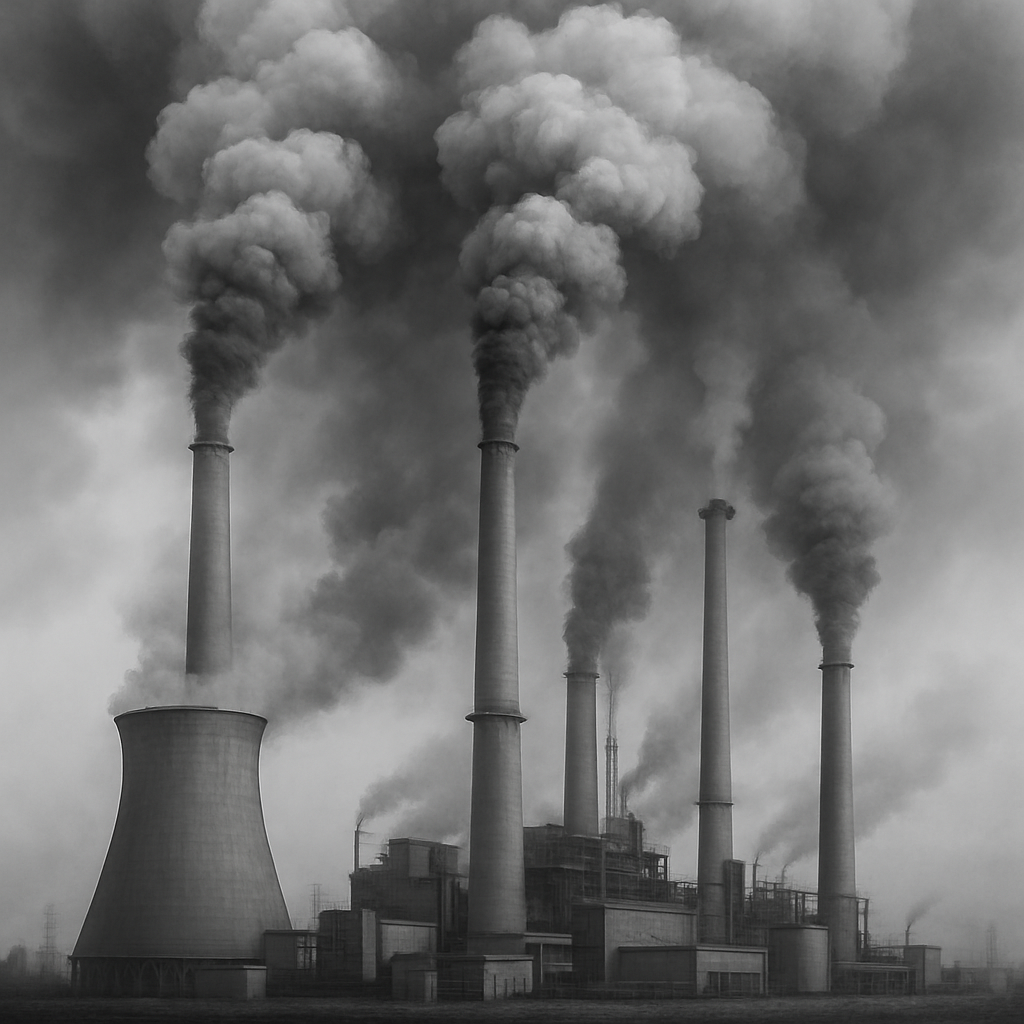
Over the past 150 years, mankind has discovered these underground carbon deposits and begun to exploit them on a large scale to meet growing energy needs. By burning fossil fuels such as coal, oil derivatives and natural gas, we are releasing carbon into the atmosphere that had accumulated for billions of years. It is a bit like opening a safe that had never been touched and spending all the savings at once: we suddenly found ourselves with an unexpected wealth of energy, but at a huge ecological cost.
The result? An increase in the concentration ofCO2 in the atmosphere from around 280 parts per million (ppm) before the industrial revolution to over 410 ppm today. This relatively rapid increase inCO2 has enhanced the natural greenhouse effect, trapping more heat and causing the global temperature to rise. It’s like adding too many blankets during the night: it’s comfortable at first, but then you wake up drenched in sweat.
But that is not all: increased carbon dioxide not only warms the planet, but also causes a series of knock-on effects. Melting glaciers, rising sea levels, extreme weather events and changes in precipitation patterns are just some of the symptoms of an out-of-balance carbon cycle. Our carbon footprint is not only warming the Earth, it is also acidifying the oceans, as some of the excessCO2 is absorbed by seawater, reducing pH and endangering marine ecosystems.
Towards a sustainable future: reducing the carbon footprint
To counteract the effects of climate change and maintain a balance in the carbon cycle, we must reduceCO2 emissions and develop low-carbon technologies. This requires a radical transformation of our energy system and our daily behaviour. Key technologies include:
– Reforestation and regenerative agriculture: Increasing the Earth’s carbon sink capacity through reforestation and agricultural practices that improve soil health and promote carbon sequestration. After all, plants are a huge silent army fighting against the greenhouse effect.
– Energy efficiency: Reducing energy consumption through efficiency improvements in buildings, transport and industrial processes can significantly reduce carbon emissions.
– Renewable energies: Solar, wind, hydro and geothermal are technologies that do not emitCO2 during energy production. They are already in use and continue to improve and expand, thanks to technological advances and cost reductions.
– Biofuels: the production of fuels based on recycling organic waste and on crops that do not compete with the food industry can accompany us in the transition to more sustainable energy sources.
– Carbon Capture and Storage (CCS): Technologies that captureCO2 produced by industrial and power sources and sequester it deep underground, preventing it from reaching the atmosphere.
– Nuclear: Research into new safe fission reactors with limited waste management problems and research into nuclear fusion – a safe and virtually inexhaustible source of energy – could provide low-carbon energy on a large scale. Although fusion is still in its experimental stages, it represents a real hope for the future, but it is very likely that the solution to the global warming problem will be synergies from a whole portfolio of new technologies.
The way forward: innovation and investment
Despite this progress, current technologies alone are still not enough to solve the climate change problem. It is essential to continue investing in research and development of new technologies and energy sources to accelerate the transition to a sustainable future. Innovation, international collaboration and forward-looking policies will be key to achieving global climate goals and ensuring a prosperous and sustainable future for future generations. Each of us can play our part.
The carbon journey is a story of balance, change and adaptation.
To ensure a future in which our planet can continue to thrive, we must better understand this life cycle and find innovative ways to restore the balance we have disturbed.
After all, carbon is just a chemical element, but it plays a decisive role in our fight for a more sustainable world. And as we continue to explore new technological frontiers, let us remember that even small changes can make a big difference: every molecule counts!