
















In the global debate on the ecological transition,nuclear energy has returned to centre stage. After having long been marginalised by high costs, safety concerns and public opposition, three main factors are now fuelling its reappraisal: the urgency of decarbonisation, geopolitical instability linked to fossil fuels and, last but not least, the potential of digital technologies to revolutionise plant design, control and safety. And if we add to this picture the potential of nuclear fusion – the reaction that powers the Sun – the whole thing becomes even more interesting.
But can nuclear energy be a winning solution in the low-emission energy mix? And what challenges remain for its sustainable development, also accelerated by digitisation? Questions that need answers, from which much of the construction of a Zero Carbon future depends.
Today’s fission, tomorrow’s fusion
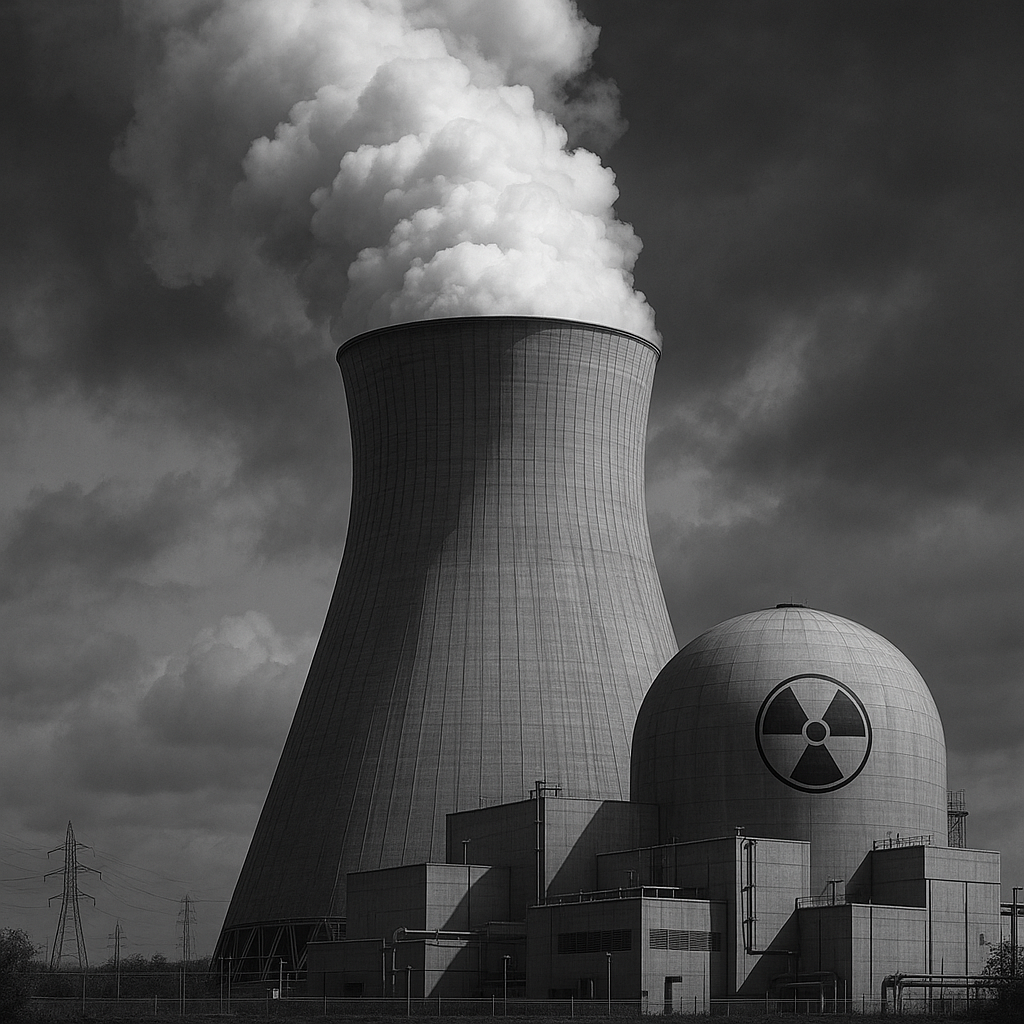
Nuclear power now accounts for a not insignificant share of the world’s low-carbon electricity: with more than 400 active nuclear reactors, it accounts for about 10% of global electricity generation, and the share rises to almost 20% in advanced economies. In absolute terms, nuclear power is, after hydropower, the world’s second-largest source of low-emission electricity. Globally, nuclear generation is growing slightly and is expected to reach an all-time high in 2025 due to the resumption of production in some areas – such as Japan – and the commissioning of new units in various markets including China, India, Europe and Korea. More than 60 nuclear reactors are currently under construction – equivalent to about 70 GW of capacity – and over 100 are planned in several countries. Interest seems to be growing today, so much so that more than 40 countries are considering the expansion or introduction of nuclear power into their energy mixes to meet strategic needs such as energy security, decarbonisation and growing electricity demand.
Current nuclear technology is based on fission – the process based on splitting heavy atoms (such as uranium) in controlled reactors – which remains central in the short to medium term.
On this front, technology trends are aiming, in particular, at improving costs and safety: on the one hand, the life cycles of existing reactors are being extended, because prolonging operation is among the most immediate and cost-effective options for producing low-emission electricity. On the other, advanced Generation IV reactors and small modular reactors (SMRs) are being developed: a new wave of innovation that promises greater safety, lower unit costs thanks to modularity, and flexibility of use. Although many of the planned innovations may not see commercial application before the years 2030-2040, fission remains the only form of nuclear power available on a large scale today.
The prospects, however, are broadened by considering nuclear fusion: the process that powers the Sun, in which light atomic nuclei come together, releasing a large amount of energy.
A theoretically safer, cleaner and virtually limitless process, which is now the subject of a global scientific race: reproducing controlled fusion with a positive energy balance requires a very high level of expertise, and the level of technological complexity of the challenge is among the highest in today’s landscape. Nevertheless, research has made significant progress in recent years, so much so that several experts agree that the first fusion reactor capable of feeding electricity into the grid could be realised by mid-century.
Nuclear fusion, the big projects in the field
One of the main strategies for achieving a controlled nuclear fusion reaction is magnetic confinement: a technology that, within a toroidal reactor – the most developed device is the Tokamak – uses powerful magnetic fields to handle the very high temperature plasma in which fusion takes place.
Important results have been achieved in this area in recent years. In February 2022, for example, the JET (Joint European Torus) reactor in the United Kingdom managed to produce 59 MJ of energy in a time window of 5 seconds, equivalent to a power output of around 11 MW: an achievement that far surpassed the previous record of 1997 – when energy production stood at around 22 MJ – and demonstrated the ability to maintain stationary fusion conditions. On the other hand, this is one of the main open challenges: the international ITER project, for example, aims to run at 500 MW for at least 400 seconds continuously, with 50 MW of heating power fed in; it will not generate electricity, but its goal is precisely to demonstrate the feasibility – scientific and engineering – of magnetic confinement fusion as a clean, large-scale energy source.
Among the other projects in the field for the development of this solution is SPARC, developed by Commonwealth Fusion Systems, a spin-out company of the Massachusetts Institute of Technology: the aim is to demonstrate the production of net energy from fusion, i.e. to succeed in producing more energy than is needed to start and maintain the reaction. On the other hand, the all-Italian DTT (Divertor Tokamak Test) project, promoted byENEA, aims to create a device – the divertor – which has the purpose of creating a region between the plasma at a very high temperature and the wall in which interaction can be controlled. Projects, these, which we have already had the opportunity to talk about in an interview on this channel, and to which Eni – one of the Italian companies that has been active in the field of magnetic fusion for the longest time – is also actively contributing.
The digital ally of nuclear power
In addressing these challenges, the contribution of new digital technologies is and will be increasingly central. Aspects such as design, control, safety and optimisation rely heavily on these innovative tools, which allow highly complex systems to be managed with greater efficiency and reliability.
Artificial Intelligence, for example. As mentioned, in fusion reactors, plasma control is a highly complex issue, requiring very fast and multidimensional decisions. This is where recent research has shown that machine learning algorithms can learn how to avoid dangerous instabilities in the plasma and assist the control system in real time. This is the work carried out by a group of researchers at the Princeton Plasma Physics Laboratory, who have shown how the AI system, once trained with experimental data, can react in milliseconds – much faster than a human operator – automatically adjusting the parameters of the fusion device to keep the plasma stable.
The digital twin concept also fits well in this area. Applied to nuclear power, this technology can in fact enable the creation of a detailed virtual model of a reactor or plant, constantly updated with real-time data from the physical plant: this allows predictive simulations and tests to be carried out in a virtual environment, improving both design and operations. Its adoption also paves the way for predictive maintenance, and offers decision support to operators in complex situations, improving plant safety and efficiency.
Another very powerful and crucial tool in this field is high-performance computing– High Performance Computing (HPC): its use can accelerate the complex physical calculations needed to design new reactors, or to test security scenarios. But that is not all. An interesting example is that of HPC6, Eni’s new supercomputing system completed and launched in November last year, the most powerful in the world for industrial purposes: the company, in fact, uses the potential of this new tool – which plays a decisive role throughout the energy chain – also to simulate the behaviour of plasma in magnetic confinement fusion.
A joint effort for a sustainable future
In short, nuclear power can be a potentially strategically important ally in the transition to a low-carbon economy. However, the contribution it can actually make will depend a great deal on the sector’s ability to innovate, and to respond to the criticisms that have historically been levelled at it: this means greatly reducing the costs and construction times of plants, but above all giving concrete answers on safety and environmental issues in order to gain – and maintain over time – public confidence. Aspects, these, with respect to which this ongoing wave of innovation – also driven by new digital technologies – if steered on the right path, can help provide the necessary support.
On the horizon, the development of nuclear fusion may further change the game. If the major projects underway are successful, humanity will have a virtually unlimited, clean source of energy with fewer long-term impacts: this does not mean postponing climate action while waiting for this solution to be consolidated, but rather to continue – in parallel with the adoption of other sustainable solutions – to pursue the enormous research and development efforts that are needed in this field, as a long-term bet to give future generations an important energy option.
Nuclear energy is not a panacea, but one of the most important tools in the climate change portfolio. The role it will play in the transition, however, will depend on the choices we make today, how we manage its risks and how we exploit its benefits: if innovation and policies succeed in bridging the trust gap and making it economically and socially acceptable, it can play a major role in the energy mix of the future. With a joint effort by the scientific community, industry and institutions, nuclear energy can make an important contribution to achieving global climate goals, while ensuring energy security and sustainable development for generations to come.
