

















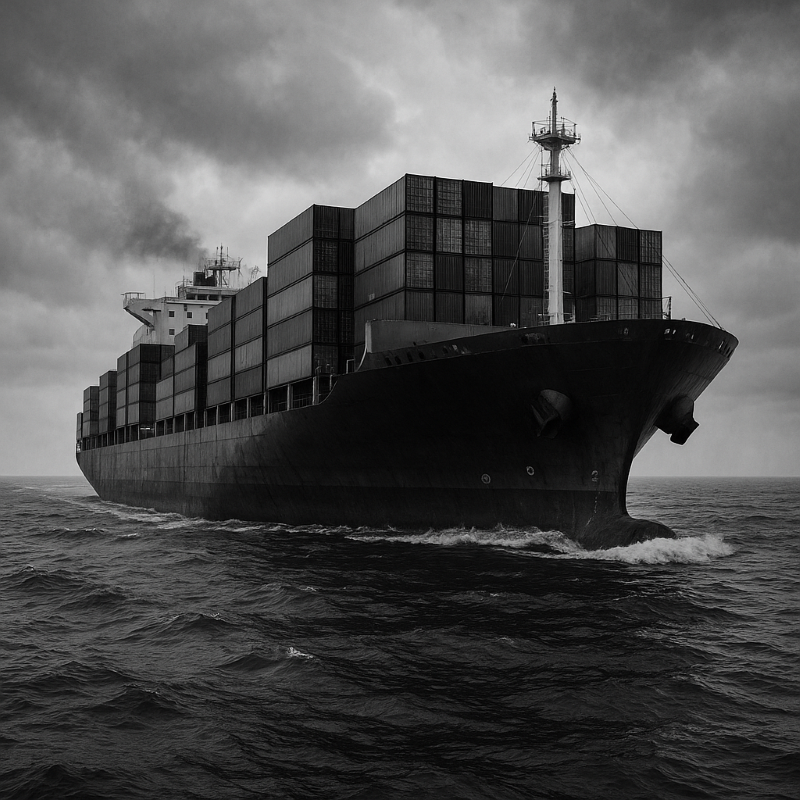

Maritime transport is a key pillar of global trade and, at the same time, a non-negligible source of emissions. Estimates indicate that ships are responsible for around 2% of global energy-relatedCO2 emissions: an only apparently modest contribution which – according to forecasts – could increase by 50% by 2050 due to the growth in traffic. This makes it necessary to decarbonise a crucial sector by initiating a transition towards more sustainable solutions. The path and the challenges – environmental and otherwise – it poses are certainly not easy, but throughelectrification, enabled by digital transformation, it will be possible to support a real sustainable revolution for the sector.
The normative compass
To address this challenge, important international and local regulations have been introduced that chart the course towards decarbonising the seas. At the global level, theInternational Maritime Organisation (IMO) recently updated its GHG emissions strategy: the ambition, specifically, is to achieve net zero emissions by 2050, with interim targets of -20% (aiming for -30%) by 2030 and -70% (aiming for -80%) by 2040.
In theEuropean Union, however, it is with the Fit for 55 package that important measures for sustainable maritime transport have been defined. Among these is FuelEU Maritime, the regulation imposing a gradual reduction in the greenhouse gas intensity of shipping fuels: -2% from 2025, -6% from 2030, up to -80% in 2050. More specifically, the targets concern not onlyCO2 emissions but also methane and nitrous oxide emissions, for the entire life cycle of the fuels used on board(well-to-wake).
These measures create a regulatory framework that provides a strong incentive for the sustainable transition of the maritime sector and, consequently, for innovation, which – as it is already proving – can be a huge accelerator on this path.
The transformation has already begun
Indeed, the electrification of maritime shipping has been moving from an experimental phase to a concrete reality for some years now, thanks to a number of innovative projects around the world. Particularly pioneering in this regard is the ferry sector: ten years ago, in 2015, the Norwegian ferry MF Ampere ushered in the era of full-electric ferries, demonstrating the feasibility of battery-powered passenger transport on short routes. Since then, Norway has witnessed an ‘electric revolution’: there are now more than 100 electric ferries operating on 67 domestic routes, cutting thousands of tonnes ofCO2 per year. Among other important ongoing projects, in the United States, the state of Washington has also planned the hybrid/electric conversion of its fleet by 2040.
But not only that, important steps are also being taken in the cargo sector. One example is the all-electric container ship Yara Birkeland in Norway, which has already successfully completed more than 250 voyages since 2021, transporting over 35,000 containers and avoiding just under 40,000 diesel truck journeys. With a 6.8 MWh battery system, this container ship is able to eliminate around 1,000 tonnes ofCO2 per year, making it an effective demonstrator of zero-emission maritime logistics.
Key technologies for this ongoing electrification are lithium-ion batteries, which offer high energy efficiency and zero local emissions while presenting challenges in terms of weight, range and safety. But for medium to large ships, especially on longer routes,hydrogen is emerging as a promising energy carrier, used in fuel cells to generate electricity on board.
Cold ironing (or shore power), i.e. the supply of power to ships from shore during the mooring phase in port, is another important element in this process. Although it does not concern shipping in the strict sense, this technology has a huge impact on the overall emissions of the sector. In fact, ships normally keep auxiliary generators switched on in port to power the cargo on board, producing emissions close to population centres: by connecting the ship to the shore power grid, the generators can be switched off, reducing local emissions to zero while at berth. From the US to Europe, there are already many major port cities that have successfully implemented cold ironing: in Europe alone, around 35% of major TEN-T ports already had electrically connected docks in 2024, totalling more than 400 equipped berths.
On-board technologies
The ‘brain’ of this transition to electrified and sustainable maritime transport, however, is digital, with already many applications of advanced technologies in optimising different aspects of ship travel.
The Digital Twin, for example, is already a pivotal tool in this area. Its function – to virtually replicate a physical asset, allowing the simulation of the system’s behaviour under various conditions – in maritime transport results in digital models of ships and shipping routes, which can be exploited to test and optimise solutions without risk to the real asset. The Port of Rotterdam, for example, uses a digital twin platform to simulate optimal ship routes by combining weather data, sea currents and traffic in real time: this enables the selection of routes that avoid bad weather, minimising delays and consumption. This predictive capability is vital for electric ships, where accurate battery power management is essential.
Closely related to the digital twins is the use of Artificial Intelligence and Machine Learning for operational optimisation, with advanced AI algorithms trained on large amounts of navigation data – both historical and real-time – allowing optimal ship behaviour patterns to be identified. In addition, Machine Learning is used for intelligent on-board energy management: on ships with hybrid systems, for example, predictive algorithms can decide when it is best to use the battery and when the generator to maximise efficiency.
Enabling this is theInternet of Things (IoT) and distributed sensing. When equipped, thousands of sensors are able to monitor parameters such as instantaneous energy consumption, battery status, electric motor performance, as well as external environmental data.
A mass of data is then transmitted over the network, creating real-time awareness of the ship’s status. This makes the IoT a kind of ‘digital nervous system’ of the smart ship: it powers both the digital twin and the AI algorithms, and enables data-driven operations that maximise efficiency and reliability.
Another technology, which originated in a completely different field, but which finds application in this sector is blockchain, which is mainly used to ensure traceability and transparency in the supply chain of new fuels and energy use. Thanks to its distributed and immutable ledger, blockchain can reliably certify the origin and quantity of the energy/fuel used: a mechanism capable of generating trust between the parties, and able to support both commercial and regulatory purposes.
A new digital and sustainable ecosystem
It will not be an easy path: the decarbonisation of maritime transport cannot in fact be separated from an adequate development of port infrastructures, with the ports of the future having to evolve into ‘smart’ ports, acting as energy hubs as well as logistics hubs, to support the recharging of electric ships, the refuelling of alternative fuels and the optimised management of energy flows.
And the ships themselves will also have to update to equip themselves with the digital tools that can make all this change truly sustainable.
This means that the industry’s energy transition will also require new business models and financing solutions. Electrification and decarbonisation entail huge investments to meet the targets set, estimated at around USD 1-1.5 trillion by 2050 globally. It is therefore essential to mobilise both public and private capital – here public-private partnerships take the lead – and to develop market mechanisms that make this epoch-making change economically sustainable.
In short, what will have to emerge for the maritime energy transition is a new ecosystem in which smart ports, power grids and investors work closely together. It will be a challenging process, requiring technological standardisation, training of specialised personnel, rapid regulatory adjustments and significant capital. But the progress that has already been made paints a promising picture, and the course seems set: electrification and digitisation, supported by ambitious policies and innovation in business models, can drive maritime transport towards its goal of zero emissions, generating benefits for the environment, people and the world’s economy.