


















In the vast superhero universe, few groups embody the theme of inclusion as much as the X-Men. Created by Stan Lee and Jack Kirby in the 1960s, Marvel’s mutants have always been a metaphor for minorities discriminated against: by race, gender, orientation, ability. They are not just heroes with extraordinary powers, but outsiders, forced to live on the margins of a society that fears and rejects them because of their genetic diversity.
The X-Men do not save the world with fluttering capes or chiselled muscles. They fight not for glory, but for recognition. They do not defend the planet from aliens, but from prejudice. They are mutants, yes, but first and foremost they are excluded. Excluded because of what makes them unique.
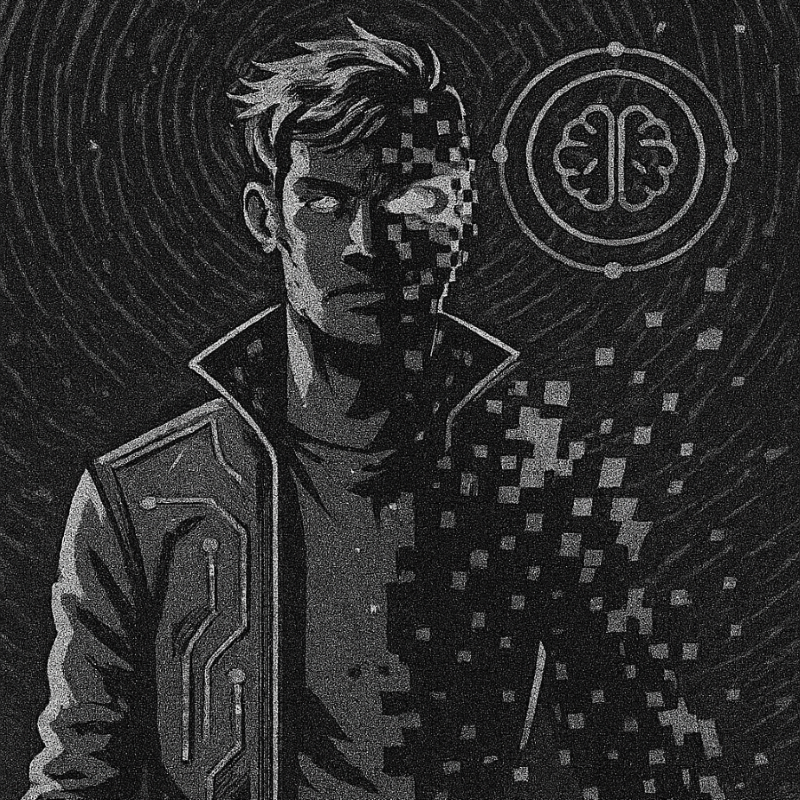
Today, in a world increasingly governed by data, predictive models and artificial intelligence, the X-Men may become the symbol of a new frontier of injustice: the digital frontier. In contemporary terms, mutants represent those who are excluded from information systems because they are ‘non-compliant’: invisible minorities in datasets, users penalised by opaque algorithms, communities excluded from technological design. They are the outliers, the anomalous data, the profiles that do not fit into the dominant parameters. They are, in other words, the ‘digital mutants’.
SDG 10 and the X-Men: when digital diversity becomes a superpower
In the X-Men universe, genetic diversity is a cause for fear. In ours, digital diversity is equally so. Millions of people are ignored by computer systems because they do not fit into dominant patterns. They do not have access to technologies, they are not represented in data, they do not participate in writing algorithms. They are not ‘visible’ to those who design the future.
This is whereSDG 10 – Reducing Inequality– comes in. Not as an abstract goal, but as a narrative ally. Because if mutants are excluded because of their biology, today entire communities are excluded because of their ‘digital incompatibility’. They do not speak the language of codes, they do not inhabit platforms, they are not mapped by systems. They are the outliers, the profiles that disturb the average. And like the X-Men, they do not ask to be normalised. They ask to be recognised.
In this reinterpretation, the X-Men become archetypes of algorithmic resistance. They bring with them an alternative vision: that of a world where diversity is not a bug to be fixed, but an asset to be protected. Where inclusion is not a concession, but a strategy. Their struggle is not just epic. It is deeply relevant today. Because today, those who are not represented in the data risk not existing. And those who do not exist in data, do not receive services, opportunities, rights. The X-Men remind us that every system can be reprogrammed. That every algorithm can be rewritten. That every digital mutant has the right to be seen, heard, included.
The X-Men are not a homogeneous group. Each has a unique power, often difficult to control, often a source of fear. But it is precisely this diversity that makes them strong. In digital terms, this is a crucial lesson: computer systems tend to normalise, to look for patterns, to exclude what does not fit the average. But it is in the outliers that innovation, resilience, human richness are hidden.
The Xavier School, a place of training and reception for mutants, can be re-read as a hub of inclusive digital education. An environment where one learns not only how to ‘use technology’, but how to understand it, criticise it, reprogram it. Where it is taught that access is not just a matter of bandwidth, but of language and representation. Where digital competence is intertwined with social awareness.
Cerebro: the algorithm that decides who exists
In the world of the X-Men, Cerebro is not just a machine. It is an omniscient eye, a mental radar capable of scanning the planet for mutants. For Charles Xavier it is a tool of protection, but in the wrong hands it can become a weapon of control. It can locate, classify, exclude. It can decide who deserves attention and who can remain invisible.
Today, in our hyper-connected world, Cerebro has changed form. It is no longer a silver helmet connected to a super-computer, but an algorithm that lives in search engines, in selection software, in surveillance systems. It is the code that filters CVs, that suggests content, that determines who gets a loan, who gets stopped on the street, who gets an opportunity.
In terms of SDG 10, Cerebro becomes the perfect metaphor for contemporary artificial intelligence: capable of collecting data, building profiles, establishing priorities. But also of perpetuating inequalities, amplifying biases, consolidating exclusions. It is the digital gaze that decides who counts and who does not.
Yet, like any technology, Cerebro can be reprogrammed. It can learn to recognise diversity not as a statistical deviation, but as a valuable value. It can be trained to seek out that which escapes, to include that which disturbs, to value that which has been ignored.
The real challenge is not to build more powerful algorithms. It is to build fairer algorithms.
Algorithms that not only see, but understand. That don’t just select, but listen. That not only decide, but question. Because after all, every Cerebro contains a choice: that between control and care, between surveillance and solidarity. And it is up to us, digital mutants, to decide which side we are on.
When Cerebro discriminates: three real cases
– Facial recognition: when the algorithm does not see you
In some facial recognition systems, a black or Asian face can be ‘less readable’ by up to a hundred times than a Caucasian one. This is not due to malice, but by omission: the data the algorithm is trained on does not tell all the faces in the world. The result? Those who are already on the margins risk being so in pixels. And when police or companies use these systems, the error is not only technical: it is social.
– Predictive justice and racial bias: the COMPAS case
In the USA, the COMPAS system incorrectly classified 45% of black defendants as ‘high risk’, compared to 23% of white defendants. In other words, two people with a similar criminal history received opposite ratings simply because they belonged to different ethnic groups. An algorithm that, instead of ensuring fairness, amplifies past biases.
– Personnel selection and gender discrimination
Some recruiting software (famous the case of the experimental system developed and then abandoned by Amazon) showed preferences for male candidates because it was trained on historical data in which leadership positions were occupied by men. The result? Systemic penalisation of female candidates.
These examples show that digital inequality is not a future dystopia, but a present reality.
Algorithms are not neutral: they reflect and amplify society’s prejudices.
Digital mutants: a narrative for activism
Imagine then an editorial, visual and narrative campaign that tells the struggle for digital equity through the eyes of mutants. Each character can embody a contemporary challenge:
– Storm, with its connection to natural elements, can become a symbol of African technological sovereignty and the need for resilient and locally managed infrastructure.
– Nightcrawler, capable of teleporting and moving in the shadows, can represent anonymous surfing, the right to privacy, the protection of personal data.
– Rogue, which absorbs the powers of others, may embody the risk of assimilating unconscious bias in machine learning models, and the need for ethical vigilance in algorithmic design.
This narrative can speak to young people, educators, policy makers. It can transform abstract concepts like “algorithmic inclusion” into living, exciting, memorable stories. It can become a tool for advocacy, training, mobilisation.
Conclusion: SDG 10 as a collective superpower
Reducing digital inequality is not just a technical issue. It is a question of imagery, of language, of power. The X-Men teach us that diversity should not be tolerated, it should be celebrated. That inclusion is not a goal, it is a strategy. That every digital mutant has a right to a place in the network.
In a world where algorithms decide who sees what, who gets a job, who gets assistance, SDG 10 becomes a collective superpower. And like any superpower, it must be trained, shared, defended.