










The evolution of atomic power plants, from their origins to the modular reactor revolution
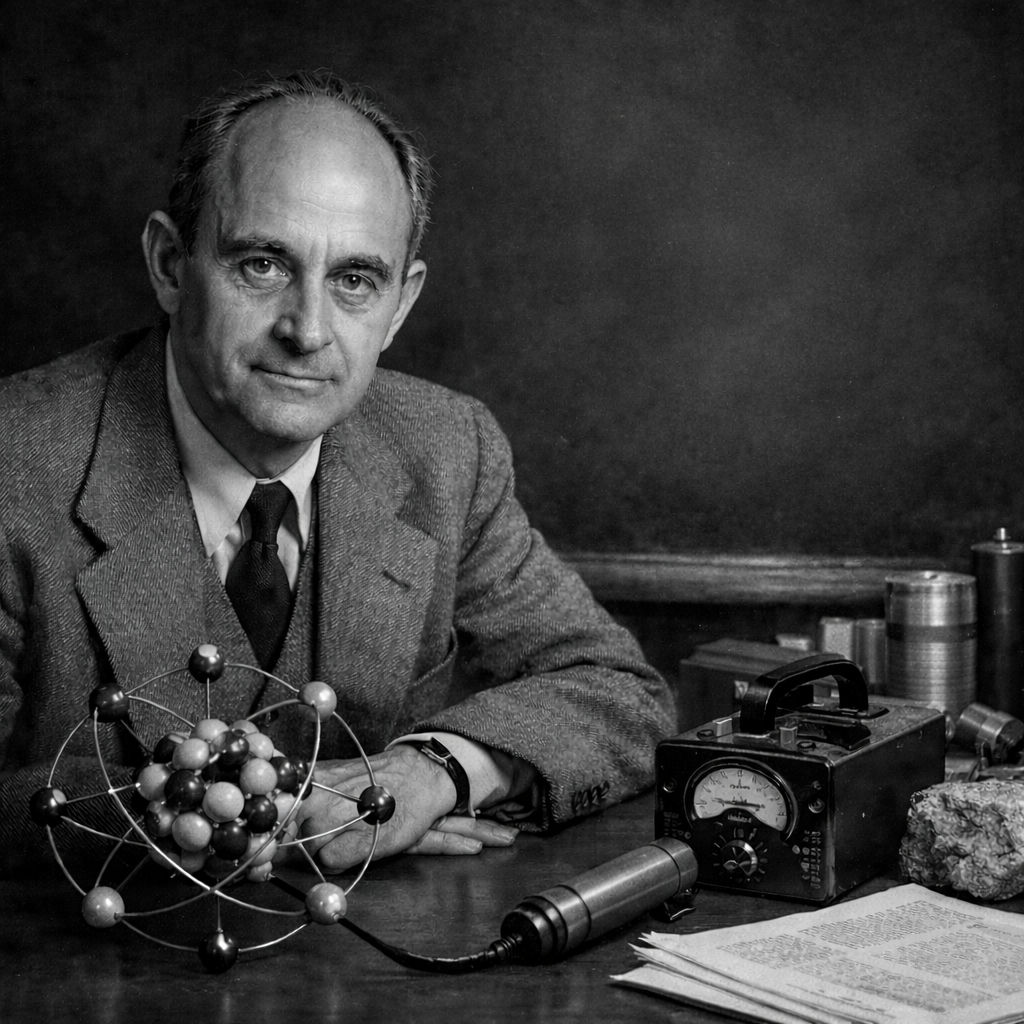
When we think ofnuclear energy, our minds often go back to the fears aroused by the Three Mile Island, Chernobyl and Fukushima disasters, events that left an indelible mark on the public perception of this energy source. Despite these traumas, nuclear energy has remained central to the debate on global energy supply. But to really understand how we got here, we need to take a step back, to the roots of this technology, going back to one of the names that marked a fundamental step in modern science. He is an Italian: Enrico Fermi, the genius who paved the way for nuclear energy as we know it today.
Fermi and the birth of nuclear power
In 1938, Enrico Fermi, an Italian physicist who had already done his share of theoretical and experimental physics, made a discovery that changed the course of history.
With his experiment on uranium fission, Fermi not only paved the way for the creation of nuclear energy, but laid the foundation for an entire industry.
The ‘controlled nuclear reaction’ he managed to achieve was nothing less than the key to the future of energy, but also a signal for the beginning of a long and complex evolution.
However, the real practical realisation of nuclear fission only came towards the end of the Second World War, first with the Manhattan Project – intended to make two different types of atomic bombs that were ‘tested’ on Japan – then with controlled fission, which led to the construction of the first atomic power plants and the birth of peaceful nuclear energy.
Since then, nuclear reactors have been at the centre of an unstoppable technological evolution that has seen our ability to handle atomic energy pass through four distinct generations. But what characterises each generation of nuclear reactors?
The first generation: the ‘test of fire
The history of nuclear technology officially begins with the first reactor in history: the Chicago-Pile 1. Designed and built by Fermi in 1942, the reactor was nothing more than an experiment. Do not think, that it was a giant: the reactor had a power output of only … 0.5 watts! There was no cooling system, no radiation shield. Only a pile of bricks shielded the reaction chamber from the experimenters. Its function was only one: to demonstrate that nuclear fission could be controlled. The chain reaction was triggered and reached the critical stage where it was self-sustaining, without shutting down but, most importantly, without exploding.
This reactor, and the increasingly larger ones that were built in those years, although they were prototypes and thus a sort of ‘proof of concept’, had the fundamental task of testing the possibility of producing nuclear energy, albeit with funding mainly of military origin. From 1950, the first commercial reactors came into operation, such as pressurised water or gas reactors, but always with the same purpose of producing energy, albeit with many limitations and with explosion risks that were far from negligible.
The second generation: nuclear power on the rise
The years following the Second World War marked a phase of great expansion for the nuclear industry. In particular, starting in the 1960s, nuclear power plants began to establish themselves as the main source of energy in many industrialised countries, including the Soviet Union, the United States and some European countries.
Second-generation reactors were based on technologies that made extensive use of water as a coolant. Unlike the gas reactors or those used in the first experiments, the second-generation reactors were based on a steam cycle, which transported the heat generated by fission to the power generation plant. In practice, the heat generated by fission heated water to a state of steam and this steam set in motion turbines that generated electricity. A kind of steam locomotive, but one that consumed uranium instead of coal.
With the onset of the 1973 oil crisis, which prompted many countries to look for alternative sources of energy in order not to depend on oil, nuclear power became one of the most sought-after solutions. Second-generation reactors, while not perfect, guaranteed stable power, but, as was later discovered with the three disasters in the United States, the Soviet Union and Japan, safety remained a crucial issue.
The third generation: safety as a priority
The Three Mile Island disaster in 1979, the Chernobyl disaster in 1986 and the Fukushima accident in 2011 had a significant impact on the public perception of nuclear power, but also on the technological evolution of the reactors themselves. The third generation of reactors focuses mainly on safety. Thanks to technological innovations, third-generation reactors are equipped with passive safety systems, which do not require human intervention in the event of an emergency, but are activated automatically. For example, the control rods of modern reactors automatically release by gravity in the event of a fault, quickly stopping fission.
However, as a result of these improvements, safety protocols, costs and implementation times have increased, and, as we have seen, the development of third-generation nuclear power plants has been affected by the loss of technical and political expertise in some regions of the world, especially in Italy after the two referendums on nuclear power held just a few months after the two biggest nuclear disasters in history.
The fourth generation: back to the future
The fourth generation of nuclear reactors, still under development, promises to revolutionise the entire industry. This new class of reactors will be characterised mainly by efficiency and flexibility: fourth-generation reactors will be able to use waste heat to produce hydrogen and even recycle nuclear waste. In addition, they will be designed to operate with more advanced materials, such as molten salts, which will allow them to work at much higher temperatures than conventional water reactors.
Some fourth-generation designs are already being tested, but commercial production is not expected before the 2030s. The fourth generation could have the potential to close the nuclear fuel cycle, significantly reducing the amount of waste produced and improving energy efficiency. The use of new fuels, such as thorium, could also reduce the risks of nuclear proliferation.
The modular reactor revolution (SMR)
One of the most fascinating innovations of the nuclear future concerns small modular reactors (SMRs). These reactors will be designed to be compact, economical and flexible. They will be able to be mass-produced and installed where energy is most needed, reducing costs and lead times. Think of a nuclear power plant that can be assembled as a construction play, capable of powering isolated areas or even entire cities with adequate power.
The modularity of SMR reactors will make them particularly suitable for meeting a variety of energy needs, with the system being easily integrated into existing infrastructures. Some of these reactors are already at the prototype stage, and it is expected that they could be commissioned in the second half of the 1920s.
Among the prototype modular reactors currently in operation are those mounted on the world’s only floating nuclear power plant: the Akademik Lomonosov.
It is obvious that even these reactors will not be zero-risk. Although not directly usable to build atomic weapons, they will be able to power – for a virtually indefinite time – submarines and military ships (possibly equipped with nuclear weapons), enabling them to make themselves almost completely independent of their support bases and virtually impregnable.
The new nuclear age: what future?
Research and development in the field of nuclear reactors is constantly evolving, with the aim of improving safety, reducing waste and cutting costs. Generation IV and modular reactors will only be the beginning of a new era for nuclear power. These technologies now seem to have reached the necessary maturity to respond to new global challenges such as climate change, the scarcity of traditional energy resources and the growing demand for affordable energy for all.
We are only at the beginning of a long journey towards an increasingly sustainable energy future, and, in all likelihood, the new nuclear power will be a major player in this transition. We will have to learn to control and guide it properly and, above all, peacefully.