

Lithium, copper, tungsten, graphite and rare earths: ISPRA map reveals that the country possesses strategic resources decisive for energy transition, industry and European autonomy
For years, Italy has told itself that it is a country poor in mines, forced to import almost everything needed for modern industry. A manufacturing nation without mines, processing raw materials from others. Today, that conviction is challenged by a very different official picture: there are widespread strategic mineral resources under the national territory, some of which have been known for decades, some of which have been re-evaluated in light of new global prices and new mining technologies.
This is the message that emerges from ISPRA’s GeMMA database – the Geological, Mining and Environmental database – built as the basis for the future national mining programme envisaged by the European regulation on critical raw materials. In an era marked by geopolitical competition over resources, Italy is thus once again questioning what it possesses underground.
Why critical raw materials matter more than oil
The 19th century was dominated by coal, the 20th century by oil, but the 21st century will be marked by lithium, copper, cobalt, graphite, nickel, rare earths and tungsten. These are the indispensable materials for batteries, electric cars, wind turbines, advanced electronics, semiconductors, missiles, power grids, data centres and defence systems.
The European Union has classified 34 of them as ‘critical’, i.e. economically essential and vulnerable in terms of supply. For many of them, the continent is highly dependent on a few foreign suppliers, often concentrated in geopolitically unstable areas or dominated by rival powers. The energy transition, which should reduce strategic dependencies, paradoxically risks creating new ones.
This is why Brussels approved the Critical Raw Materials Act, requiring member states to map available resources, accelerate strategic projects and strengthen recycling. In Italy the central task is entrusted to ISPRA.
The Italian picture: few active mines, much greater potential
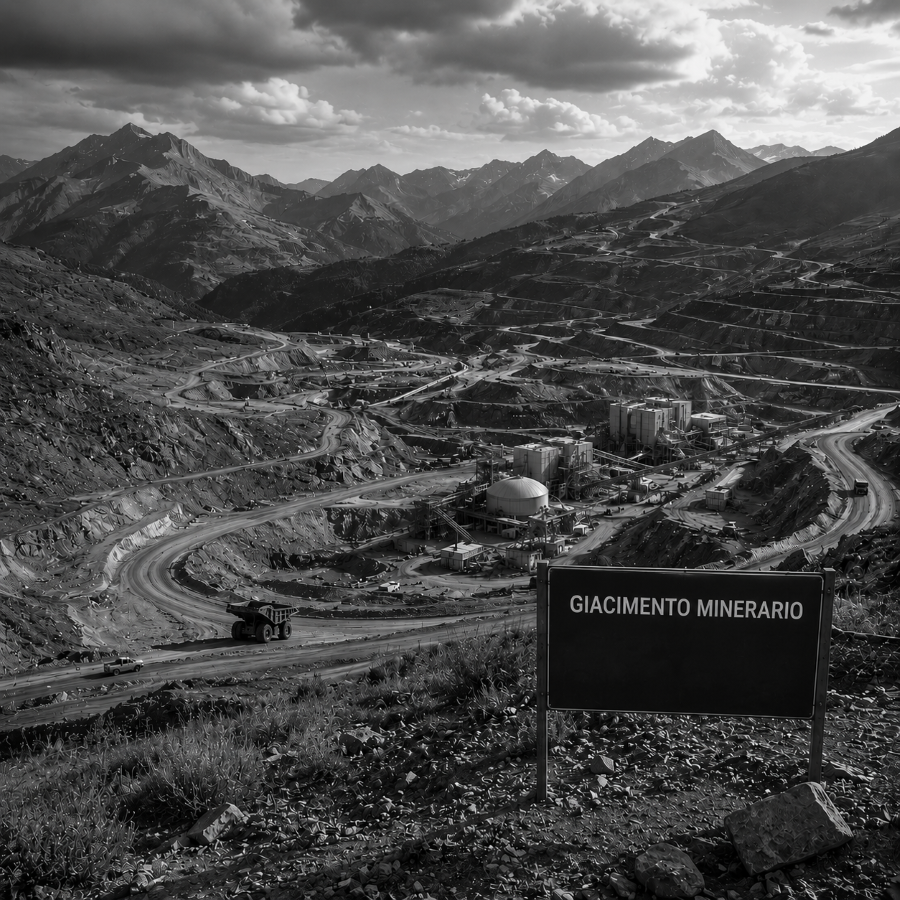
According to ISPRA data, 76 mines are still active in Italy today. Of these, 22 concern materials on the European list of critical raw materials. But the figure must be read carefully: actual production is concentrated almost exclusively on two materials.
In 20 mines, feldspar is extracted, which is essential for the ceramic industry. In 2 mines fluorspar is extracted, in the areas of Bracciano and Silius. Fluorspar is used in the steel, aluminium, glass, electronics and refrigeration industries. The Genna Tres Montis mine in southern Sardinia could become one of the most important mines in Europe once the revitalisation work is completed.
The rest of the critical metallic raw materials are practically not mined today. This means that Italy continues to depend almost entirely on foreign markets for copper, cobalt, tungsten, graphite and other strategic materials. But geology tells a different story: deposits exist, often already surveyed, and many could be revalued at current prices.
Where Italy’s strategic minerals are found
The map drawn up by ISPRA redraws the country’s mining geography.
Copper, the key metal in all electrical and electronic technology, is known in the Tuscan Colline Metallifere, the Ligurian-Emilian Apennines, the Western Alps, Trentino, Carnia and Sardinia. In an electrified economy, copper is worth more than is often perceived: electric cars, cables, motors, transformers and networks require increasing quantities of it.
Manganese, important for special steels and batteries, is documented mainly in Liguria and Tuscany. Tungsten, a very hard metal used in industrial tools and military applications, appears in Calabria – Cosenza and Reggio Calabria area – in eastern and northern Sardinia and in the central-eastern Alps.
Cobalt, crucial for batteries and super alloys, is reported in Sardinia and Piedmont. In particular, the Punta Corna deposit is indicated as being of European strategic importance. Magnesite is present in Tuscany, while magnesian salts are found in the Veneto Pre-Alps.
On thealuminium front, the raw material is bauxite. Modest deposits can be found in the central Apennines, but larger deposits are to be found in Apulia and especially in Nurra, Sardinia. Here, the Olmedo mine, the last metalliferous mine closed in Italy, is still maintained in good condition. According to ISPRA, it is precisely the bauxites of Olmedo that could contain exploitable quantities of rare earths.
Lithium and graphite: the heart of the energy transition
If there is one material that symbolises the new resource race more than any other, it is lithium. Italy possesses it in two different forms.
The presence of the mineral is known in the pegmatites of the islands of Elba, Giglio and Vipiteno. But the most promising new development concerns the geothermal fluids of the Tuscan-Lazio-Campania area, where significant quantities have been identified. In this case, extraction could take place using techniques integrated with geothermal systems, potentially with a lower environmental impact than traditional mining. ISPRA reports that the Lazio Region has already issued seven exploration permits.
Next to lithium is graphite, a key material for battery anodes. Italy’s historical deposits are located in the Turin, Savona and Sila areas. Two research permits are active in the Piedmont area. In a market dominated by China, even small European volumes would be of strategic value.
A surface deposit? Mining waste
Perhaps the most surprising fact concerns the country’s industrial past. Previous mining activities have left a legacy of some 150 million cubic metres of mining waste. Today, many of these sites represent an environmental problem, with widespread contamination of soil and water. But they can also become a new industrial frontier.
The processing residues often contain the same metals now sought after on the global market. Recovering them would mean a double advantage: reclaiming degraded territories and obtaining secondary raw materials without necessarily opening new mines. This is the logic of the circular economy applied to Italian mining history.
From waste to urban mining: the recovery of critical minerals
This mining legacy is now joined by another ‘urban mine’, less visible but increasingly strategic: that of electrical and electronic waste. Italy is among the largest European producers of WEEE – computers, smartphones, household appliances, batteries, electronic boards and end-of-life industrial equipment – which contain significant quantities of copper, lithium, cobalt, nickel, rare earths, gold, silver and palladium.
In recent years, industrial activities oriented towards the recovery of these secondary raw materials are being developed, either through specialised WEEE treatment plants or through the recycling of lithium-ion batteries from electronics and e-mobility.
An important role is played by Italian companies specialising in the recovery of precious and electronic metals. Groups such as Stena Recycling, also active in Italy, process technological waste by recovering copper, aluminium and strategic metals from discarded electronic equipment.
In Brescia, Greenthesis Group operates in the management and valorisation of industrial and technological waste, while in Piedmont and Lombardy, initiatives are being developed specifically for the recycling of lithium ion batteries, considered a future strategic source of lithium, nickel and cobalt.
Particularly significant is the case of the Erion WEEE consortium, one of Italy’s leading WEEE management systems, which coordinates the collection and treatment of large volumes of electronic waste for raw material recovery. In parallel, the ENEA group is conducting research on ‘urban mining’ technologies and hydrometallurgical processes to extract critical metals from spent batteries, permanent magnets and electronic boards. The Italian URBES project, integrated in the EU’sUrban Mine Platform and supported by Italian universities and research centres, also aims to transform technological waste into a real industrial resource.
In perspective, this supply chain could play a crucial role: on the one hand, reducing dependence on imports, on the other hand, reducing the environmental impact of opening new mines. However, metal recovery from e-waste is technologically complex, requires advanced chemical and mechanical separation processes and, above all, an efficient collection and traceability network. This is why urban mining is now considered not only an environmental policy, but a true industrial and geopolitical strategy.
The political node: dig in or depend
The problem is not only geological, but above all one of political strategy. Italy has resources. Not enough to make it self-sufficient, but enough to reduce critical dependencies, feed industrial supply chains and strengthen its European negotiating weight.
Reopening mines or developing new projects, however, means investing in research and development of new, more sustainable technologies, dealing with slow authorisations, territorial objections, strict environmental standards, a lack of technical expertise and a public culture that for decades has associated mining only with the past.
Meanwhile, the world accelerates. Those who control lithium, copper, rare earths and graphite control a growing part of the global economy. The underground, the quarry materials abandoned in our mountains and the Italian WEEE bins, long left out of the debate, could become central again. Not out of industrial nostalgia, but for a much more contemporary reason: without critical raw materials, there is neither energy transition nor economic sovereignty.