




Between ambition and controversy in the fight against cancer. How a quack can undermine trust in science and slow the path to a world where appropriate cures are available to those who need them
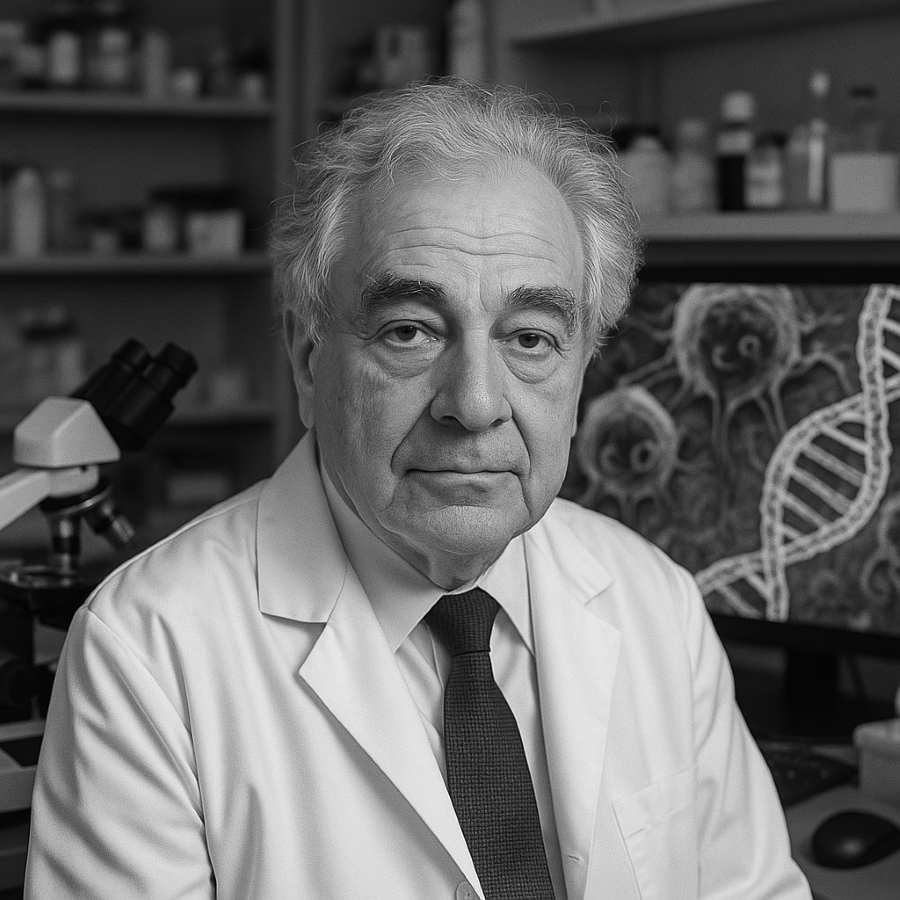
The story of Carlo Maria Croce ‘s career is one of the most fascinating and controversial in modern science. Known as one of the most influential oncologists of his generation, Croce made his way into the field of cancer research with discoveries that promised to revolutionise the diagnosis and treatment of oncological diseases. However, his career is punctuated by scandals and accusations of scientific fraud that raise doubts about his integrity and the validity of his work.
Brilliant start
Croce was born in 1944 in Milan, Italy, demonstrating from an early age an exceptional intellectual capacity and a strong determination to make his mark in scientific research. After graduating in Medicine and Surgery from La Sapienza University in Rome in 1969, he moved to the United States to pursue his career. He first worked for a short time at Columbia University, and then joined the Wistar Institute in Philadelphia, a centre of excellence in cancer research. Here he began his work on the molecular mechanisms of tumours, a field that was taking its first steps in the 1970s.
Croce is particularly interested in the genes responsible for uncontrolled cell growth, an area that represents one of the greatest challenges for the scientific community at the time.
Pioneering discoveries
In the 1980s, Croce achieved international fame thanks to a series of discoveries that put him at the forefront of cancer research. One of his first discoveries concerns the MYC gene, an oncogene, i.e. a gene that, when mutated or overexpressed, can turn a quiet, relaxed cell into a cancerous cell. The discovery of the MYC gene is revolutionary, as it provides a new understanding – at the molecular level – of how tumours develop. This paves the way for a new branch of oncology research, focused on identifying oncogenes and their function in cancer growth.
Besides MYC, Croce contributes to the discovery of other tumour-related genes, such as BCL2, associated with follicular lymphoma, and the set of microRNAs, small RNA molecules that regulate gene expression. Croce and his team discover that abnormal expression of microRNAs may contribute to the formation of cancer cells, an idea that could lead to new therapeutic strategies to fight tumours.
Croce’s research is so cutting-edge that rumours begin to circulate about his possible nomination for the Nobel Prize. His articles are published in prestigious scientific journals such as Nature and Science: in the academic world, he becomes a reference point.
Too much perfection?
However, something does not add up. Right at the height of his success, the first shadows on Croce’s career emerge. Colleagues and reviewers begin to notice a strange ‘perfection’ in his research results. In particular, some of his articles show images of electrophoretic gels (a technique used to separate and analyse proteins and DNA) that appear suspiciously similar, almost identical, even in different studies. This similarity is starting to raise concerns: how is it possible that separate experiments, conducted on different samples, produce such remarkably consistent results?
In the world of scientific research, perfection is often a worrying sign. Real data, in fact, tend to be ‘messy’. Different patients, samples, solvents, reagents, treatment methods, analysis instruments and, often, even experience and even the hand of the operator (who may have woken up crooked that day) produce variations in the data even when collected as rigorously as possible. Even the best graphs are made up of experimental points that deviate from the perfect expected line.
It is precisely here that statistical analysis comes into play. This allows the significance of experimental results to be tested, establishing how likely it is that the observed data are due to the phenomenon being studied rather than to chance or some experimental problem. In other words, statisticians measure the probability that the apparent order or disorder of the data reflects a true relationship between variables (such as a drug affecting tumour growth) or is the result of random fluctuations or errors in procedures.
But in Croce’s work, the graphs show near-perfect correlations, suggesting that the results have been somewhat ‘adjusted’ to confirm the hypotheses. Real data rarely all stand at attention like disciplined little soldiers.
Ohio State University investigates
In 2004, our hero moved to Ohio State University, where he took over as director of the prestigious Comprehensive Cancer Centre. In addition to the honours, a salary of more than $850,000 per year does not hurt either. Here he continues to publish at a frenetic pace, signing an average of 30-40 articles per year. An impressive volume of work, but one that further fuels suspicion: is it really possible to maintain such a pace without compromising the quality and integrity of research?
Rumours about possible irregularities in Croce’s work became more and more persistent, until, on 8 March 2017, the New York Times published an investigation that cast a sinister shadow over the oncologist’s career. The article reveals that Ohio State University launched several internal investigations into his activities and discovered significant irregularities in at least seven published studies.
OSU’s internal investigation confirms allegations of image manipulation and plagiarism. According to the findings, Croce deliberately altered some electrophoretic gel images to make the results appear more significant than they actually were. In addition, Croce took other images from different previous studies and presented them as originals without disclosing that they were materials that had already been used.
Devastating consequences
The discovery of the manipulations in Croce’s work has a devastating impact on his career and reputation. The university decides to remove him as director of the Cancer Centre, although it allows him to remain on the faculty… and leaves him with a salary of ‘only’ $804,461 per year. Decisions that raise quite a few criticisms within the academic community.
To make matters even worse, several scientific journals found evidence of manipulation and began withdrawing articles signed by Croce. To date, 15 articles have been withdrawn, five have been classified as ‘worrying’ and 23 have had to be corrected. These are among the highest figures ever recorded for a single researcher. Croce’s research on microRNAs, in particular, is under scrutiny, and many of his groundbreaking claims are now viewed with great scepticism.
Dilemma in the scientific community
The case of Carlo Maria Croce is not only a personal tragedy – for the professional but also for patients waiting to be treated and their families – but represents a profound dilemma for the scientific community. His fall casts a shadow over an entire field of research and threatens to undermine public confidence in science and medicine. If such a celebrated researcher can fall so low, what confidence can we ever have in medicine as a whole?
The scientific community, for its part, is trying to respond to this crisis with greater transparency and rigour. In the wake of the scandal, many journals are introducing stricter controls to prevent data manipulation, and institutions such as OSU are strengthening internal review procedures to ensure the integrity of research.
Confidence in science
The case of Carlo Maria Croce reminds us how crucial it is to rely on medical research and practices based on strict scientific ethics. When unscrupulous people manipulate data to gain fame or funding (Croce received a total of $86 million in federal funds during his career), they not only endanger the health of patients, but also undermine public trust in science.
It is only through a collective commitment to truth and transparency that we can ensure that the right treatments are available, but are also effective and accessible to those who need them; thus enabling us to continue on our path towards a more sustainable and equitable future for all.