


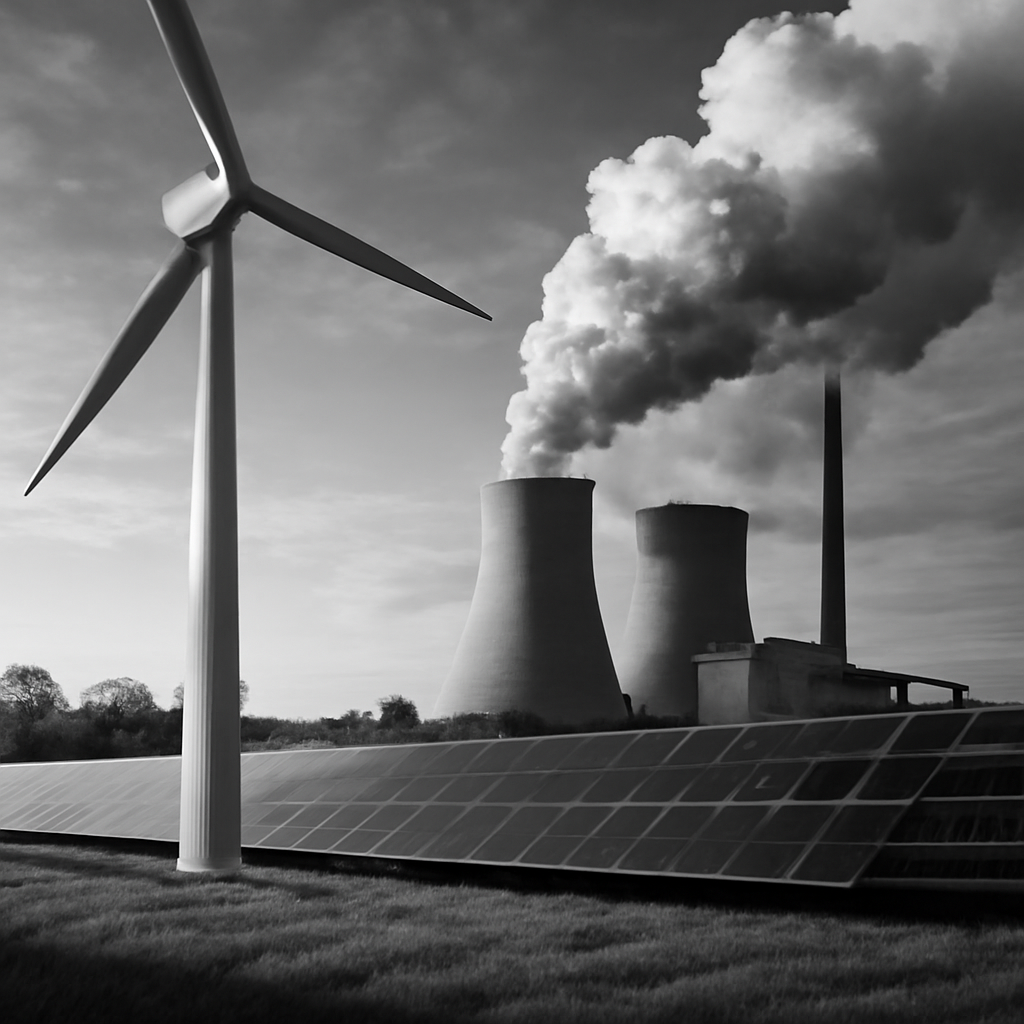

On the path to a sustainable future, every actor in society is called upon to play their part. The climate crisis, the need to reduce emissions, force us to radically rethink the way we produce, consume and share energy.
The energy transition cannot in fact be reduced to a question of large industrial plants or international political decisions alone. It needs the widespread contribution of everyone: territories, companies, citizens themselves.
This is where the potential of Energy Communities comes in: an innovative model of energy production and sharing, combining sustainability, active participation and digital innovation. Thanks to these realities, each individual or group can contribute directly to decarbonisation, improving energy efficiency and, at the same time, fostering social cohesion. It is a different way of thinking about and acting on the transition, showing how sustainability is as much a technological issue as a cultural and collective challenge.
From Community to Sustainability
Groups of citizens, companies, public bodies or associations that come together to produce, consume and manage energy in a shared way, using renewable sources. These are, in short, the energy communities, whose basic concept is simple but revolutionary: to overcome the centralised model of energy production and distribution and to build, at local level, generation and consumption networks capable of promoting sustainability and returning direct benefits to the community.
They operate through systems, e.g. photovoltaic, installed on roofs, public buildings, brownfield sites or private spaces, and the energy produced is self-consumed by community members. The most popular governance model is the cooperative model: one member, one vote. This approach ensures a fair distribution of benefits and strengthens social capital; however, there are also hybrid models, in which local authorities, public enterprises and citizens co-participate through flexible forms of association.
In terms of impact, the potential of these realities is very high and touches on several dimensions. From an environmental point of view, they contribute to lowering emissions and reducing dependence on fossil fuels, increasing the share of renewable energy produced and consumed locally; from an economic point of view, they enable participants to save money and, in some cases, generate shared value in the territory; but perhaps the most interesting and innovative aspect is the social and cultural one: energy communities, in fact, transform citizens into so-called prosumers, conscious producers and consumers who actively participate in energy choices, promoting inclusion, equity and cohesion.
The Regulatory Context
In the last five years in particular, the concept of energy community has gained centrality in the European and Italian debate, becoming one of the key tools to enable an energy transition that is not only more sustainable in environmental terms, but also fairer. The European Union, with the RED II Directive (2018/2001), introduced a precise legal definition of ‘renewable energy community’, recognising the right of citizens to become active players in the energy system: producers, consumers, storers and suppliers of energy.
In Italy, the transposition of RED II took place in stages.
An initial regulation introduced by the Decreto Milleproroghe 162/2019 initiated a transitional regime, allowing the establishment of renewable energy communities within certain limitations (maximum power of 200 kW and members under the same secondary cabin).
Full implementation then came with Legislative Decree 199/2021 – effective from December 2021 – which transposed RED II, establishing rules for the participation of citizens, SMEs and local authorities.
This has marked the beginning of a path that, however, still encounters some difficulties. For example, several Italian energy communities were born out of public initiatives or large utilities, with a top-down approach: incentives, regulatory simplifications, technical support and inclusive financial instruments are needed to encourage bottom-up initiatives. In short, steps forward have been taken, but aspects such as administrative fragmentation and slow authorisation procedures remain open problems.
The state of the art in Italy: lights and shadows
According to data released by the GSE in March this year, there are 212 renewable energy communities (RECs) currently active in our country, with 326 connected renewable plants, a total installed capacity of 18 MW and 1956 connected consumers. When compared with the PNRR’s target – which sets a target of 1730 MW of installed power through collective self-consumption configurations or energy communities by 30 June 2026 – it is clear that the figure is still very low: we are in fact just over 1% of the target set, and time is short.
As a demonstration, however, of the growing awareness of and interest in this type of initiative, almost 4,000 applications for new CERs have been received by the GSE, corresponding to a total capacity of about 390 MW. This is an interesting figure, which seems to lay the foundations for rapid growth in the coming months: a growth that, however, in order for it to take shape, will have to be supported by an adequate regulatory framework that favours rather than slows down its development.
The Digital Brain of Energy Communities
If the heart of energy communities is energy sharing, digital technologies can be the brain behind its efficient, secure and transparent operation. Digital platforms, artificial intelligence, blockchain, each of these tools plays an increasingly central role in the management of these initiatives, making possible the optimisation of energy flows, real-time monitoring and the direct participation of citizens.
Artificial intelligence, for instance, can enable the prediction of photovoltaic production based on weather data, and thus dynamically adapt consumption by maximising self-consumption and reducing waste. Digital platforms then allow community members to easily check their energy data, verify economic and environmental benefits, or participate in decisions of collective interest. As for blockchain, with its ability to ensure transparency and traceability, it can help in securely certifying energy exchanges between community members, fostering peer-to-peer energy trading models.
In short: energy communities can be described as a virtuous synthesis of technology, sustainability and social participation.
They are a great opportunity to build a new development model based on proximity, sharing and responsibility. On their own, they are not enough to solve the complex puzzle of energy transition, but they can certainly accelerate the path, making it more inclusive and widespread in the process. And digital technologies – if carefully designed and implemented – can further amplify the positive impact of this type of initiative by simplifying its management.
In an increasingly distributed, intelligent and sustainable energy system, energy communities can become real laboratories of change. A concrete way of demonstrating that the challenge of sustainability will not be won unless we take shared responsibility from the bottom up. Supported by the technologies we will choose to use in this fundamental journey and by a regulatory and operational framework that facilitates the spread of these realities, which represent one of the main strategic levers for the energy transition in our country.
