


ImageImageImageImageImageImageImageImageImageImageImageImageImageImageImageImageImage

UNI/PdR 147:2025, published the new version of the Reference Practice for Digital Sustainability

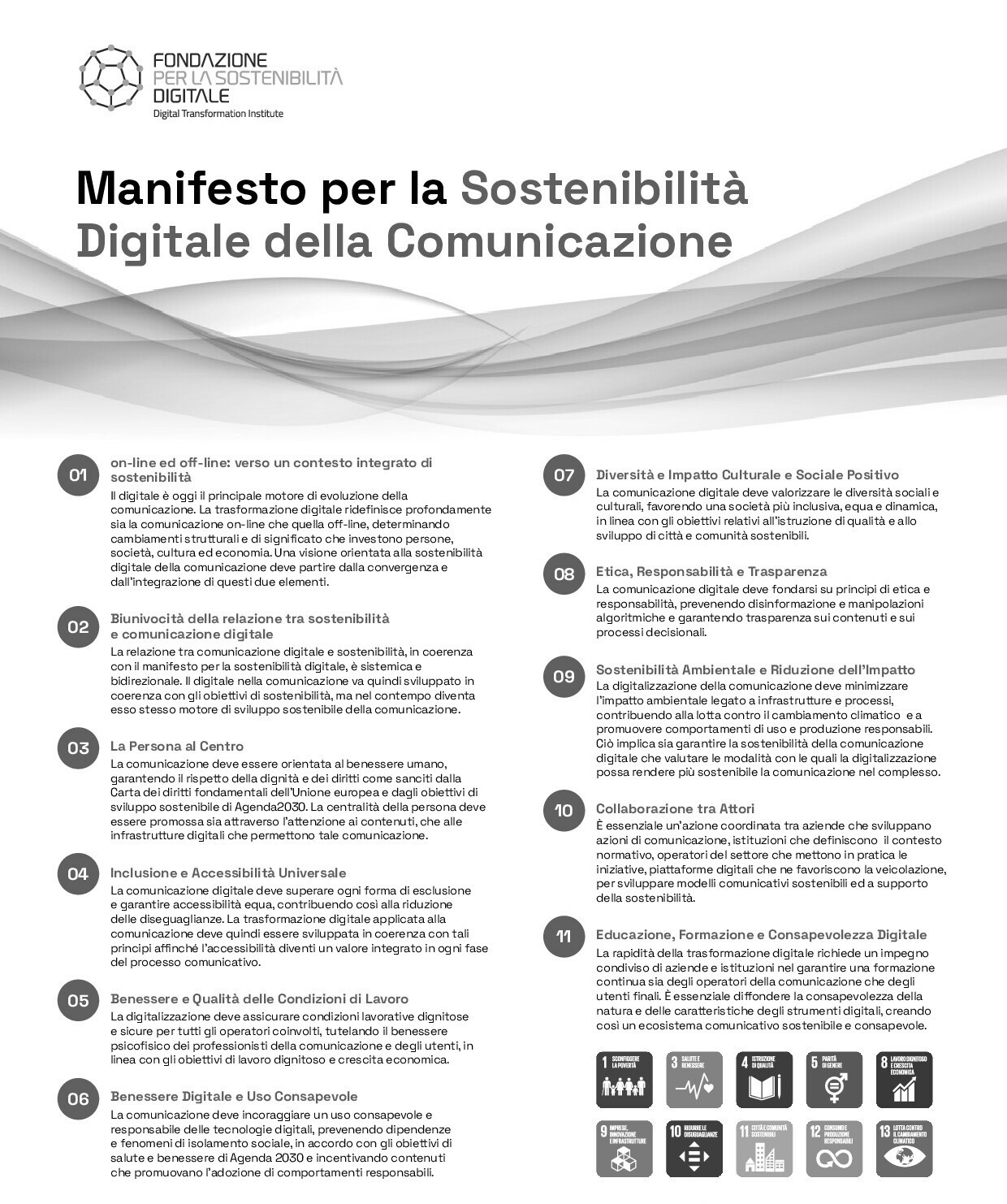
Digital technology must be developed according to sustainability criteria and, at the same time, represent an essential tool for building a sustainable future. This is the assumption that encapsulates the concept of Digital Sustainability: a concept that must be increasingly central to the strategies and operations of companies and organisations, which today are grappling with … Read more

The Revolt of the Satisfied in the Age of Haste: When revolutions are made by the rich who have no time

“Lo mal fabbro blames lo ferro”. Dante- banquet Once revolutions were made by the poor who took to the streets and overturned the system. Now revolutions are made by the rich – those who are already well off and want to be better off. We could call it: The Revolution of the Satisfied. It is … Read more

The Role of In-Houses between Public Demand and Private Supply

In the context of digital transformation, accelerated today by Artificial Intelligence, In-House companies play a crucial strategic role. Indeed, they are not limited to collecting the needs of public administrations, but have the task of interpreting, structuring and translating them into technical specifications and concrete requirements. It is not just a matter of redefining existing … Read more

The satellite model, a sustainability accelerator for businesses

Today, sustainability is no longer an accessory variable, but an indispensable condition for the very survival of companies. Regulatory pressure, growing stakeholder attention and the urgency of environmental problems have in fact contributed to making this challenge particularly complex, imposing a rethinking not only of production processes, but also of organisational models. The aim is … Read more

In-House Operational Flexibility to Respond to PA Needs

ICT in-house companies are characterised by a number of fundamental and indispensable elements, also based on operational flexibility, in order to meet the needs of their public member organisations. The first element is domain expertise, i.e. the knowledge and skills required to perform activities in particular fields and sectors of public administration, characterised by a … Read more

Digital Sustainability, when networking makes a difference: interview with Giulia Genuardi

If digitisation is the tool that can enable a sustainable transition, it is knowledge, open and shared, that can really steer it towards sustainability. And this knowledge must be built together, because digital sustainability is a challenge that no one can face alone. This is the vision that unites the Enel Foundation, a company committed … Read more

©2025 Fondazione per la sostenibilità digitale

Tech Economy 2030 è una testata giornalistica registrata. Registrazione al tribunale di Roma nr. 147 del 20 Luglio 2021

Powered by DTILab  - Designed by Fattoria Creativa - Developed by EHT